

Cultivating an Unstoppable Network and Mentorship Ecosystem
In the high-stakes arena of tech startups, your network isn’t just a list of contacts; it’s your lifeline, your sounding board, and often, your greatest competitive advantage. For women, building a robust, diverse, and supportive network is paramount, offering not only access to resources and opportunities but also a crucial buffer against isolation and bias. Data consistently shows that strong professional networks are correlated with higher rates of success in securing funding and achieving business growth. By 2026, the landscape of professional networking will be even more digitally integrated and globally accessible, meaning your approach must be both strategic and expansive.
Think beyond casual introductions. We’re talking about cultivating genuine relationships that offer mutual value. This means actively seeking out individuals who can provide diverse perspectives, industry insights, and strategic connections. Consider the power of a “personal board of directors” – a curated group of mentors, advisors, and peers who can offer guidance on everything from product development to fundraising pitches. These are the individuals who will celebrate your wins, help you navigate your failures, and provide honest, constructive feedback when it’s most needed.
- Strategic Event Engagement: Attend industry conferences, tech meetups, and startup pitch events, both online and in-person. Don’t just show up; prepare targeted questions, identify key individuals you want to meet, and follow up meaningfully.
- Leverage Digital Platforms: Platforms like LinkedIn, industry-specific forums, and even niche Slack or Discord communities can be goldmines for networking. Engage in discussions, share your expertise, and connect with thought leaders. Remember, authentic engagement trumps mere connection requests.
- Seek Out Mentors & Sponsors: A mentor offers guidance and wisdom, while a sponsor actively advocates for your career advancement and introduces you to opportunities. Actively seek out both. Don’t be afraid to make direct, respectful requests, clearly outlining why you admire their work and what specific areas you hope to learn from them.
- Be a Mentor & Sponsor: Reciprocity is key. Offer your own expertise, open doors for others, and pay it forward. Mentoring emerging talent not only strengthens your network but also sharpens your leadership skills and keeps you abreast of fresh perspectives.
- Join Women-Focused Tech Communities: Organizations like Women in Tech, Girls in Tech, or specific local chapters provide invaluable community, resources, and often, tailored mentorship programs designed to address the unique challenges faced by women in the industry. These communities can be particularly powerful for finding like-minded peers who understand your journey.
Building an unstoppable network isn’t about collecting business cards; it’s about building bridges, fostering genuine connections, and creating an ecosystem of support and mutual growth. As the tech world becomes increasingly competitive, those with the strongest, most diverse networks will be best positioned to innovate, adapt, and succeed.
Mastering the Art of Self-Advocacy and Confident Leadership
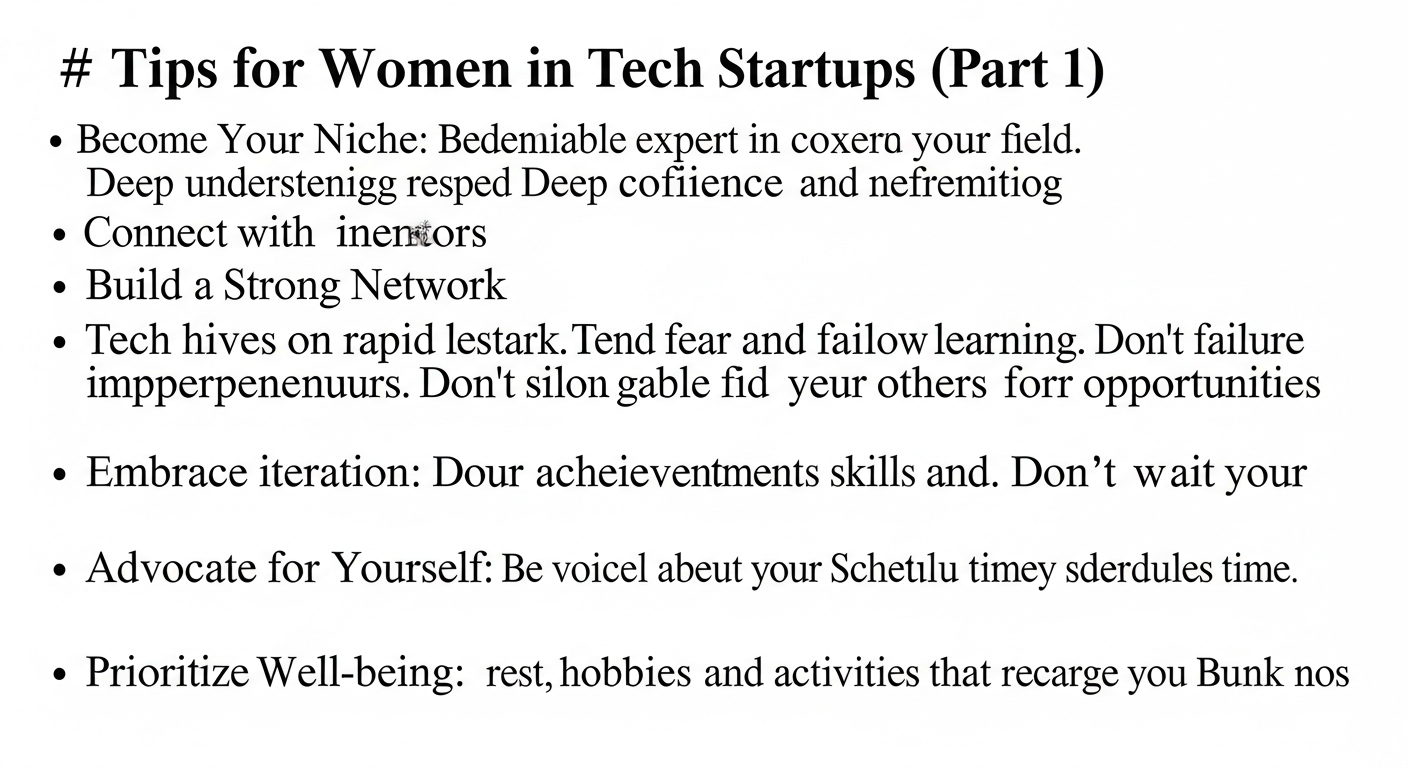
The startup world demands a unique blend of vision, resilience, and an unwavering belief in one’s own capabilities. For many women, however, imposter syndrome – the persistent feeling of self-doubt despite external evidence of competence – can be a significant hurdle. Mastering self-advocacy and embodying confident leadership isn’t just about projecting an image; it’s about internalizing your value, owning your achievements, and confidently asserting your vision. This is particularly crucial in environments where unconscious biases can sometimes lead to women’s contributions being undervalued or overlooked.
Your leadership journey in a tech startup requires more than just technical prowess or strategic acumen; it demands a strong, authentic voice. By 2026, the demand for emotionally intelligent and inclusive leaders will be higher than ever, making your ability to lead with confidence and advocate for yourself and your team a critical differentiator.
Building Unshakeable Self-Belief:
- Acknowledge and Celebrate Your Wins: Keep a running log of your accomplishments, big and small. Regularly review them to reinforce your capabilities and silence the inner critic. Data shows that founders who track progress and celebrate milestones maintain higher motivation and resilience.
- Embrace a Growth Mindset: View challenges as opportunities for learning, not as definitive failures. Understand that expertise is built through continuous effort and iterative improvement.
- Seek Constructive Feedback: Actively solicit feedback from trusted mentors and peers. Use it to identify areas for development, but also to confirm your strengths and impact.
- Practice Power Posing and Body Language: Non-verbal cues significantly influence how others perceive you and even how you perceive yourself. Stand tall, make eye contact, and project an open, confident demeanor.
Effective Self-Advocacy Strategies:
- Articulate Your Value Clearly: When pitching investors, negotiating contracts, or leading team meetings, clearly state your unique value proposition, your expertise, and the tangible results you deliver. Use data and metrics to back up your claims.
- Negotiate Assertively: Whether it’s for funding, partnerships, or your own compensation, learn to negotiate with confidence. Research benchmarks, understand your worth, and be prepared to walk away if terms don’t align with your value.
- Speak Up and Be Heard: In meetings, ensure your ideas are heard and attributed correctly. Don’t shy away from contributing to discussions, even if you feel you’re entering a male-dominated conversation. Practice succinct, impactful communication.
- Set Boundaries: Confident leadership also means protecting your time and energy. Learn to say no to requests that don’t align with your priorities and delegate effectively to empower your team.
- Build Your Personal Brand Narrative: Understand the story you want to tell about yourself and your startup. Control this narrative through your online presence, presentations, and interactions. This is crucial for attracting talent, investors, and customers.
Mastering self-advocacy and confident leadership is a continuous journey. By proactively addressing imposter syndrome, honing your communication skills, and consistently asserting your value, you not only empower yourself but also inspire those around you to reach their full potential, fostering a dynamic and high-performing startup culture.
Harnessing Cutting-Edge Tech to Propel Your Startup Forward
From AI-powered analytics to sophisticated automation platforms, the right tech stack can significantly boost your business operations, marketing efforts, and overall competitive edge. Knowing “Different tech tools to boost your business” and how to integrate them effectively is a non-negotiable skill for any modern founder.
Strategic Technology Adoption for Startup Growth:
- AI and Machine Learning for Data Insights:
- Utilize AI tools for predictive analytics to forecast market trends, personalize customer experiences, and optimize pricing strategies.
- Implement ML algorithms for efficient data analysis, allowing you to quickly identify user behavior patterns and inform product development.
- Leverage AI-driven tools for competitive analysis, giving you insights into competitor strategies and market positioning.
- Automation for Operational Efficiency:
- CRM Systems (e.g., HubSpot, Salesforce): Automate sales processes, manage customer relationships, and track leads effectively. This frees up valuable time for strategic initiatives.
- Marketing Automation Platforms (e.g., Mailchimp, Marketo): Streamline email campaigns, social media scheduling, and lead nurturing, ensuring consistent brand communication.
- Project Management Tools (e.g., Notion, Asana, Trello): Centralize task management, enhance team collaboration, and track project progress in real-time, fostering accountability and efficiency.
- HR and Payroll Automation: Automate administrative tasks, allowing you to focus on talent acquisition and employee development rather than manual processing.
- Cloud Computing and Scalability:
- Build your infrastructure on scalable cloud platforms (AWS, Google Cloud, Azure) to ensure your services can handle rapid growth without significant upfront hardware investments.
- Utilize serverless computing to optimize costs and deployment speed, allowing your technical team to focus on innovation rather than infrastructure management.
- Data Analytics and Business Intelligence:
- Implement robust analytics tools (e.g., Google Analytics, Tableau, Power BI) to track key performance indicators (KPIs) across all facets of your business.
- Use data dashboards to visualize performance, identify bottlenecks, and make informed, data-driven decisions that propel your startup forward.
- Regularly audit your data collection methods to ensure accuracy and compliance, especially with evolving data privacy regulations.
- Emerging Technologies for Competitive Advantage:
- Explore the potential of Web3 technologies, blockchain for secure transactions, or NFTs for unique digital assets if relevant to your industry.
- Consider augmented reality (AR) or virtual reality (VR) to create immersive customer experiences or innovative product demonstrations.
- Stay abreast of advancements in quantum computing and biotechnology, understanding how these nascent fields might impact your long-term strategy.
The strategic integration of these technologies allows women founders to create leaner, more agile, and highly scalable businesses. By leveraging data to drive every decision and automating repetitive tasks, you can focus your invaluable time and energy on innovation, strategic partnerships, and building a powerful brand that resonates in the market. The ability to effectively choose and implement the right tech tools will be a defining factor in your startup’s trajectory towards success in 2026.
Navigating the Fundraising Landscape with Data-Driven Prowess
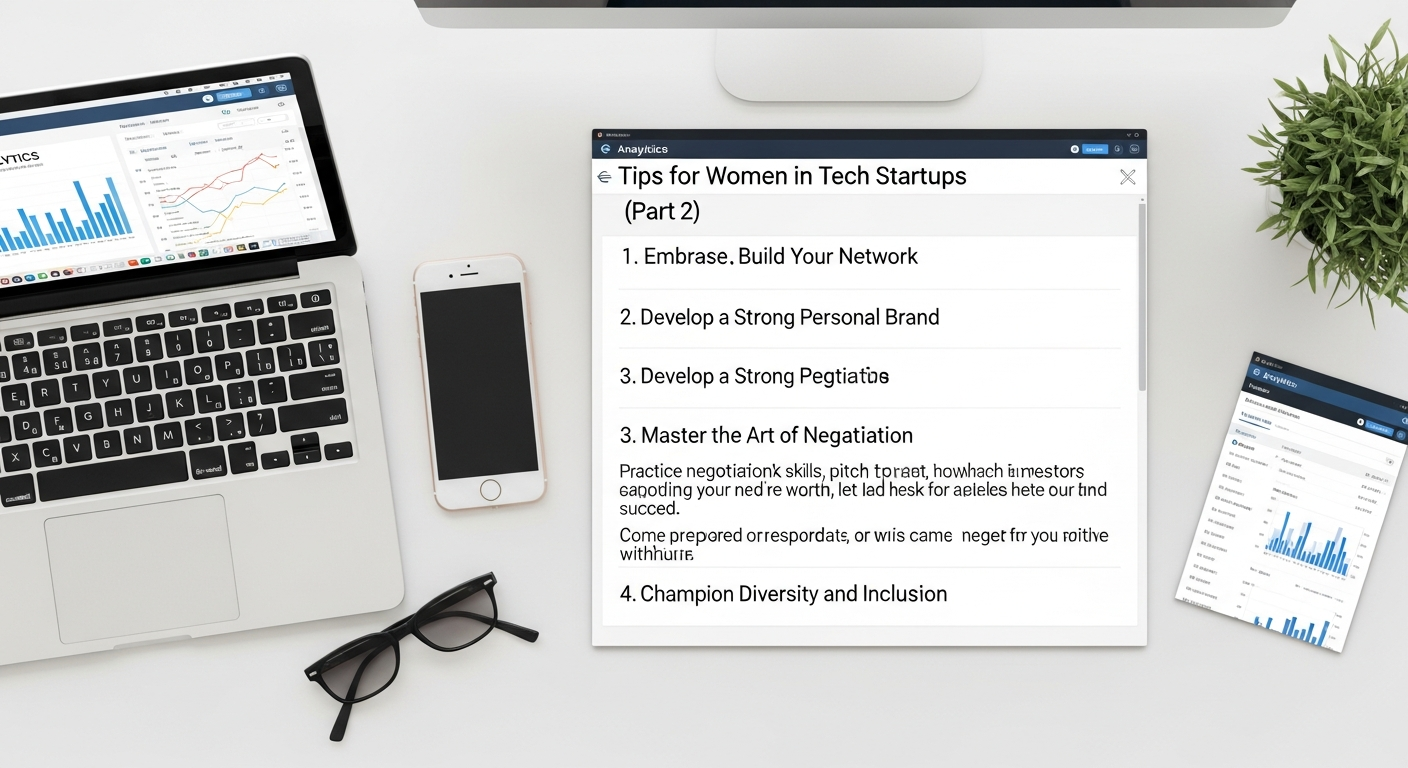
Securing capital is often the most formidable hurdle for any startup, and for women founders, the challenge can be compounded by inherent biases in the venture capital world. Data consistently shows that women-led startups receive a disproportionately smaller share of venture funding, despite often demonstrating higher returns on investment. To overcome this, women in tech startups must approach fundraising with an unparalleled level of data-driven preparation, strategic communication, and an unshakeable belief in their value proposition.
By 2026, investors will increasingly scrutinize not just ideas, but concrete metrics, demonstrable traction, and a clear path to profitability. Your ability to articulate your vision through the lens of data will be your most potent weapon.
Key Strategies for Data-Driven Fundraising:
- Master Your Metrics:
- Know Your KPIs Inside Out: Be intimately familiar with your customer acquisition cost (CAC), lifetime value (LTV), monthly recurring revenue (MRR), churn rate, and growth rate. These are the language of investors.
- Show Traction, Not Just Potential: Present real-world data on user engagement, sales growth, product adoption, and market validation. Concrete evidence of progress is far more compelling than projections alone.
- Understand Unit Economics: Demonstrate that your business model is sustainable and scalable. Show how each unit of your product or service contributes to profitability.
- Craft a Data-Backed Pitch Deck:
- Your pitch deck should tell a compelling story, but it must be supported by robust data. Each claim about market size, customer need, or growth potential should have a data point or research finding to back it up.
- Visualize your data clearly and concisely. Use charts, graphs, and infographics to make complex information easily digestible.
- Include a detailed financial model that projects realistic revenue, expenses, and profitability, demonstrating your understanding of the financial levers of your business.
- Research and Target Investors Strategically:
- Identify venture capitalists and angel investors who have a proven track record of investing in women-led businesses or in companies within your specific industry vertical.
- Research their portfolio companies, their investment thesis, and their typical check sizes. Tailor your pitch to align with their interests and investment criteria.
- Look for investors who bring more than just capital – seek out those who offer strategic guidance, industry connections, and mentorship.
- Build a Strong Advisory Board:
- Assemble a diverse group of advisors with relevant industry experience and strong networks. Their presence can lend credibility to your startup and open doors to potential investors.
- An advisory board with diverse perspectives can also help you refine your business strategy and strengthen your pitch.
- Practice, Refine, and Get Feedback:
- Rehearse your pitch relentlessly. Be able to articulate your business in 30 seconds, 3 minutes, and 10 minutes.
- Seek feedback from mentors, fellow founders, and even mock investors. Be open to criticism and continuously refine your narrative and data presentation.
- Anticipate tough questions and prepare data-driven answers for potential investor concerns about market risk, competition, or team experience.
- Explore Diverse Funding Avenues:
- Don’t limit yourself solely to traditional VC. Explore grants, government funding programs, crowdfunding platforms, and angel networks specifically targeting women entrepreneurs.
- Consider bootstrapping or seeking convertible notes and SAFE agreements in early stages to defer valuation discussions until you have more traction.
Navigating the fundraising landscape is a marathon, not a sprint. By arming yourself with impeccable data, a compelling narrative, and strategic investor targeting, women founders can confidently stride into pitch meetings, debunk biases, and secure the capital needed to transform their innovative ideas into thriving enterprises.
Building a Resilient Brand and Amplifying Your Voice in 2026
In the fiercely competitive startup ecosystem, a strong brand isn’t just a logo or a tagline; it’s the sum total of every interaction, every message, and every perception associated with your company and, critically, with you as its leader. For women in tech, building a resilient personal and company brand is paramount to attracting talent, customers, and investors, and to shaping your legacy. By 2026, the digital landscape will be even more saturated, making authentic storytelling and strategic digital marketing indispensable tools for amplifying your voice. This is where understanding “4 ways tech is changing the way we market” becomes crucial, allowing you to leverage innovation for impactful brand building.
Your brand is your promise, your reputation, and your unique identity in a crowded market. It’s how you stand out, connect with your audience, and build trust. For women founders, a strong personal brand also serves as a powerful testament to your expertise and leadership, challenging stereotypes and inspiring future generations.
Strategies for Brand Resilience and Amplified Voice:
- Define Your Brand’s Core Story and Values:
- What problem does your startup solve? What is its unique mission? What values guide its operations? Clearly articulate these elements to form the foundation of your brand narrative.
- As a founder, what is your personal mission? How does it align with your company’s vision? Authenticity in your story resonates deeply.
- Leverage Content Marketing for Thought Leadership:
- Create high-quality, insightful content (blog posts, whitepapers, videos, podcasts) that addresses industry challenges, shares your expertise, and demonstrates your vision. This positions you and your company as authorities.
- Regularly contribute to industry publications and forums. Share your unique perspective on emerging trends, technologies, and challenges in the tech space.
- Reference: This aligns with how tech is changing marketing by enabling personalized content delivery and showcasing expertise through diverse digital formats.
- Master Digital Marketing Channels in 2026:
- Personalized Marketing at Scale: Utilize AI and data analytics to deliver highly targeted content and offers to individual customers, making every interaction feel bespoke. This is one of the “4 ways tech is changing the way we market.”
- Immersive Experiences: Explore AR/VR, interactive content, and experiential marketing to engage your audience in novel and memorable ways. Think beyond static ads.
- Ethical Data & Privacy Focus: Build trust by demonstrating transparent data practices and prioritizing customer privacy. Consumers are increasingly valuing brands that respect their data. This is another critical shift in modern marketing.
- Community Building: Foster active online communities around your brand. Engage with users on social media, forums, and dedicated platforms to build loyalty and gather invaluable feedback.
- SEO Optimization: Ensure your website and content are optimized for search engines to increase organic visibility. Use relevant keywords related to your industry and solutions.
- Cultivate a Strong Online Presence:
- Maintain an active, professional presence on platforms like LinkedIn, showcasing your accomplishments, insights, and leadership.
- Consider starting a podcast or appearing as a guest on relevant industry podcasts to share your journey and expertise, reaching a broader audience of potential customers and investors.
- Engage with your audience on social media platforms where your target demographic resides. Be responsive, authentic, and consistent.
- Strategic Public Relations and Media Engagement:
- Proactively seek media opportunities to tell your story. Target tech publications, business journals, and even mainstream media outlets that cover entrepreneurship and innovation.
- Develop compelling press kits and be prepared to articulate your vision clearly and concisely to journalists.
- Attend and speak at industry conferences. Public speaking engagements are powerful platforms for brand visibility and thought leadership.
Building a resilient brand and amplifying your voice requires consistent effort, strategic thinking, and a willingness to adapt to the evolving digital landscape. By embracing innovative marketing techniques and staying true to your authentic narrative, women founders can carve out a unique space, establish credibility, and drive significant impact in the tech world of 2026.
Strategizing for Sustainable Growth and Well-being in the Startup Grind
The exhilarating pace of a tech startup can be both addictive and exhausting. While the drive for rapid growth is often celebrated, true long-term success hinges on a sustainable approach that prioritizes not just the company’s health, but also the well-being of its founders and team. For women in tech startups, who often shoulder additional societal expectations and face unique pressures, strategizing for sustainable growth and personal well-being is not a luxury, but a strategic imperative. Burnout is a real threat, and a healthy leader is the cornerstone of a thriving enterprise.
By 2026, the conversation around mental health in startups will be more prominent, and companies that genuinely support employee well-being will attract and retain top talent. As a woman founder, demonstrating a commitment to sustainability—both business-wise and personally—sets a powerful precedent for your organization.
Pillars of Sustainable Growth and Well-being:
- Prioritize Personal Well-being:
- Set Clear Boundaries: The startup world can blur lines between work and personal life. Establish non-negotiable times for rest, family, and personal activities.
- Practice Self-Care Non-Negotiables: Whether it’s exercise, meditation, hobbies, or spending time in nature, identify activities that rejuvenate you and make them a consistent part of your routine.
- Seek Support: Don’t hesitate to lean on your network, mentors, or professional therapists. Admitting you need help is a sign of strength, not weakness.
- Delegate Effectively: Understand that you cannot do everything. Empower your team by delegating tasks, trusting their capabilities, and focusing your energy on strategic leadership.
- Build a Culture of Resilience and Empathy:
- Lead by Example: Demonstrate healthy work-life integration. If you’re constantly sending emails at midnight, your team will feel pressured to do the same.
- Foster Psychological Safety: Create an environment where team members feel safe to voice ideas, admit mistakes, and ask for help without fear of judgment.
- Promote Open Communication: Encourage regular check-ins, transparent feedback, and honest conversations about workloads and well-being.
- Offer Mental Health Resources: Consider integrating mental health support, flexible work arrangements, and well-being programs into your company benefits.
- Strategic Planning for Long-Term Impact:
- Define Your North Star: Beyond immediate revenue targets, what is the long-term vision and impact you want your startup to have? A clear purpose can sustain motivation through challenging times.
- Embrace Iteration, Not Perfection: Understand that growth is iterative. Celebrate progress over perfection, and learn from setbacks without letting them derail your vision.
- Diversify Revenue Streams: To reduce dependence on single income sources and ensure stability, explore different business models or product offerings as your startup matures.
- Invest in Team Development: A strong, skilled, and motivated team is your greatest asset. Invest in their professional development, provide growth opportunities, and create clear career paths.
- Data-Driven Decision Making for Balance:
- Use analytics not just for product and marketing, but also to understand team workload, productivity patterns, and engagement levels.
- Monitor metrics related to employee satisfaction and retention. High turnover can be an early indicator of an unsustainable culture.
- Make data-informed decisions about scaling, hiring, and resource allocation to prevent overstretching your team and resources.
Sustainable growth in a tech startup isn’t about avoiding the hustle; it’s about optimizing it. It’s about building a company that can endure market fluctuations, retain its talent, and continue to innovate for years to come, all while nurturing the individuals who power its success. For women founders, embracing this holistic approach is key to building not just successful businesses, but also fulfilling and impactful careers.
Frequently Asked Questions
Recommended Resources
Explore Remote Work Tips For Beginners for additional insights.
You might also enjoy Information Architecture Explained from Layout Scene.