
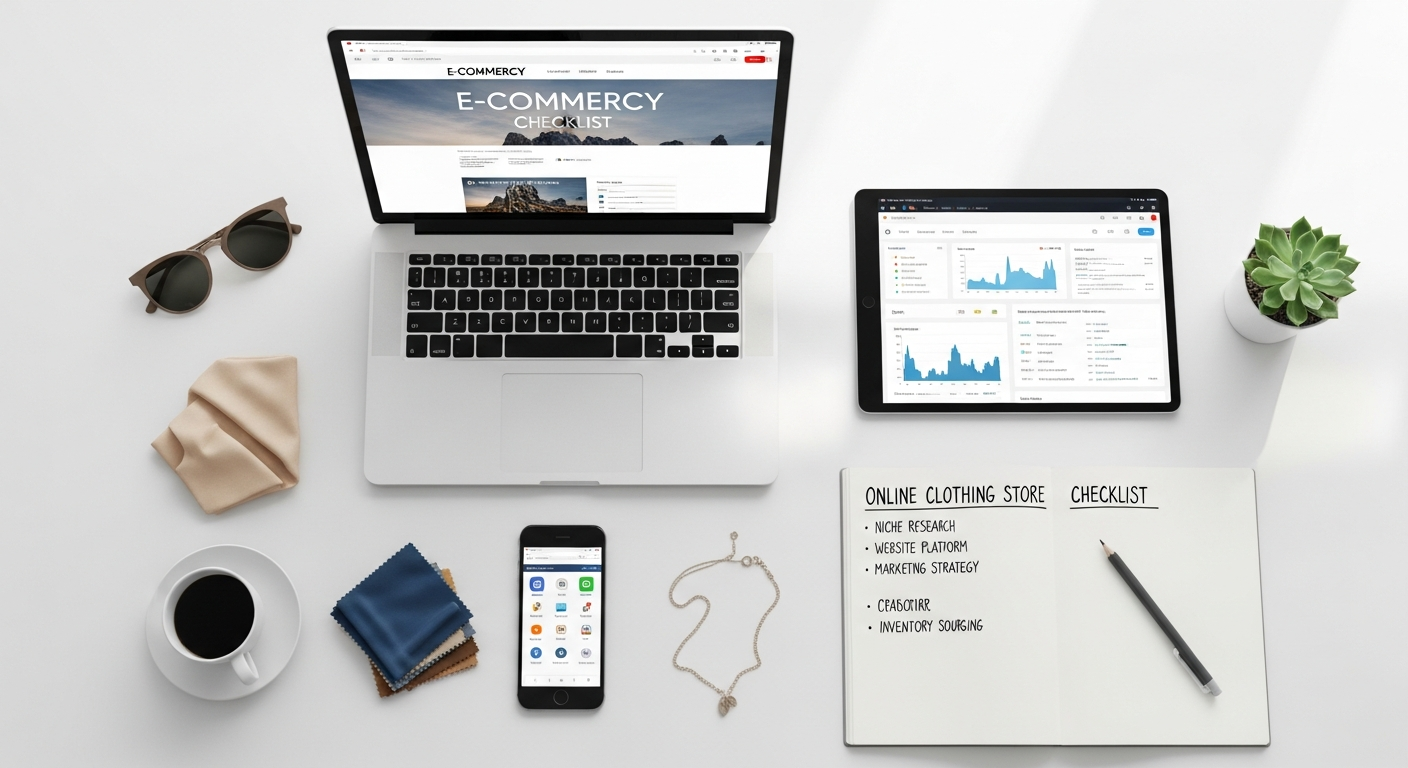
Forging Your Fashion Empire: Vision, Niche, and Business Blueprint
Embarking on the journey to launch an online clothing store requires more than just a passion for fashion; it demands a strategic, data-driven approach akin to any successful tech startup. The digital shift has profoundly reshaped retail, granting unprecedented global reach and dissolving traditional barriers to entry. Your first mission is to define your vision and pinpoint your niche with surgical precision. This isn’t about casting a wide net; it’s about identifying a specific segment of the market that is underserved or ripe for a fresh perspective.
Niche identification is paramount. Begin with rigorous market research. Who are your potential customers? What are their demographics, psychographics, and purchasing habits? Utilize analytics tools, social listening platforms, and consumer trend reports to uncover unmet needs or emerging styles. Perhaps it’s sustainable activewear for Gen Z, adaptive fashion for individuals with disabilities, or high-tech work-from-home attire. A narrow, well-defined niche allows for targeted marketing, fosters brand loyalty, and reduces direct competition. Consider how unknown candidates have taken advantage of technology to win in other sectors by focusing on niche communities and hyper-personalization – the same principle applies here. Leveraging data to understand micro-trends and consumer sentiment can provide a significant competitive edge, allowing you to position your brand precisely where demand outstrips supply.
Once your niche is clear, you must articulate a comprehensive Business Plan. This foundational document will serve as your roadmap, guiding every decision from product development to marketing strategy. It should include:
- Your mission and vision statements: What problem are you solving? What impact do you want to make?
- Detailed market analysis: Size of your target market, growth potential, key trends.
- Competitive analysis: Identify your direct and indirect competitors. What are their strengths and weaknesses? How will you differentiate?
- SWOT analysis: Strengths, Weaknesses, Opportunities, Threats specific to your venture.
- Marketing and sales strategy: How will you reach your customers and convert them?
- Operational plan: How will you source, store, and ship your products?
- Financial projections: Startup costs, revenue forecasts, break-even analysis, funding requirements.
Branding is the soul of your online store. Your brand name, logo, aesthetic, and brand story must resonate deeply with your target audience. In a crowded digital space, a strong brand identity is crucial for standing out. Invest in professional design and thoughtful storytelling. Your brand should communicate your values, your unique selling proposition (USP), and the lifestyle you represent. For instance, if your niche is sustainable fashion, your branding should inherently reflect eco-consciousness, transparency, and ethical practices. This isn’t just about pretty visuals; it’s about crafting an emotional connection that transforms casual browsers into loyal advocates. A robust brand foundation, meticulously crafted through data-driven insights and creative vision, sets the stage for a truly impactful online clothing store in the competitive landscape of 2026.
Building Your Digital Storefront: The Tech Stack Foundation
In the digital age, your online clothing store is not just a website; it’s a sophisticated tech platform designed for seamless user experience and robust functionality. Selecting the right e-commerce platform is arguably the most critical technical decision you’ll make, as it forms the backbone of your entire operation. Options like Shopify, WooCommerce (for WordPress users), BigCommerce, and Adobe Commerce (Magento) each offer distinct advantages and cater to different business sizes and technical proficiencies.
Shopify, for instance, is renowned for its user-friendliness, extensive app ecosystem, and scalability, making it a popular choice for startups and rapidly growing brands. Its drag-and-drop interface allows for quick setup, while its vast app store provides solutions for everything from advanced analytics to inventory management. WooCommerce offers greater customization for those comfortable with WordPress, giving you complete control over your site’s design and functionality, though it often requires more technical expertise for setup and maintenance. BigCommerce is favored by larger businesses for its robust enterprise-level features and scalability, while Adobe Commerce (Magento) provides unparalleled flexibility and power for complex operations, often requiring dedicated development teams.
Regardless of your chosen platform, website design and user experience (UX) are paramount. Your site must be aesthetically pleasing, intuitive to navigate, and, critically, mobile-first. A significant portion of online shopping now occurs on mobile devices, meaning your store must be perfectly optimized for smaller screens, fast loading times, and touch interactions. High-quality product photography and video are non-negotiable in fashion e-commerce; they are the digital equivalent of trying on clothes. Implement clear calls to action, easy checkout processes, and robust search and filtering options to enhance the customer journey. Focus on Conversion Rate Optimization (CRO) from day one, constantly testing and refining elements to improve the likelihood of a sale.
The power of your digital storefront also lies in its integrations. This is where you truly harness different tech tools to boost your business. Integrate reliable payment gateways (Stripe, PayPal, Apple Pay, Google Pay) to offer diverse payment options. Connect with shipping APIs (e.g., ShipStation, EasyPost) for streamlined fulfillment. Implement a Customer Relationship Management (CRM) system to manage customer interactions and personalize communications. Integrate advanced analytics tools (like Google Analytics 4) to track user behavior, sales data, and marketing campaign performance. These integrations automate tedious tasks, provide valuable insights, and enhance the overall efficiency of your operation, allowing you to focus on growth rather than manual processing. Cyber security is also non-negotiable; ensure your platform and integrations comply with the highest standards, including SSL certificates and robust data protection protocols, to build trust with your customers.
Sourcing & Inventory: The Backbone of Your Operation
One of the most appealing models for startups is dropshipping. This method allows you to sell products without holding any inventory yourself. When a customer places an order, you simply forward it to a third-party supplier who then ships the product directly to the customer. The primary benefits include low upfront costs, minimal inventory risk, and the ability to offer a wide range of products. However, dropshipping can come with lower profit margins, less control over product quality and shipping times, and a reliance on the supplier’s reliability. Tech tools like Oberlo or Dripshipper integrate seamlessly with e-commerce platforms, automating order fulfillment and product listing, making it a powerful way for unknown candidates to take advantage of technology to win by rapidly testing markets and scaling without traditional inventory overhead.
Another popular option, especially for custom apparel brands, is Print-on-Demand (POD). Similar to dropshipping, POD services allow you to create and sell custom-designed products (t-shirts, hoodies, mugs, etc.) without managing inventory. When an order is placed, the POD provider prints your design on the product and ships it directly to the customer. Companies like Printful or Printify integrate directly with Shopify and other platforms, streamlining the entire process. This model offers creative freedom, zero inventory risk, and high flexibility for testing new designs, making it an excellent choice for niche brands focusing on unique graphic apparel.
For those seeking greater control over product quality and branding, wholesale or private label sourcing is often preferred. With wholesale, you purchase existing branded products in bulk at a discounted rate and resell them. Private labeling involves working with a manufacturer to produce products under your own brand name. This model offers better profit margins, greater control over product quality, and the ability to build a distinct brand identity. However, it requires a larger upfront investment in inventory and carries the risk of unsold stock. Finding reliable suppliers, whether domestic or international, involves thorough vetting, sample testing, and clear communication regarding quality standards, ethical practices, and production timelines.
Finally, for ultimate control and a truly unique product, some brands opt for manufacturing their own garments. This requires significant investment in design, production, and quality control infrastructure but offers complete oversight from concept to creation. Regardless of the sourcing model, efficient inventory management systems (IMS) are crucial. These systems, often integrated with your e-commerce platform, help you track stock levels, forecast demand, manage returns, and prevent overselling or stockouts. Leveraging these different tech tools to boost your business ensures that your operational backbone is robust, responsive, and ready to support your growth.
Delivering Excellence: Payments, Shipping, and Customer Service
The digital storefront is only as good as its operational excellence, and in the world of online fashion, this translates directly to seamless payment processing, efficient shipping, and empathetic customer service. These three pillars are critical for building trust, fostering repeat business, and ensuring a superior customer experience that rivals, and often surpasses, traditional retail.
Payment gateways are the literal conduits of commerce. Offering a variety of secure and convenient payment options is non-negotiable in 2026. Integrate popular gateways like Stripe, PayPal, Apple Pay, Google Pay, and potentially local payment methods relevant to your target audience. Ensure your system supports multi-currency options if you plan to sell internationally. Security is paramount; customers must feel confident that their financial information is protected. Implement strong fraud detection measures and comply with PCI DSS standards. A frictionless checkout process, with minimal steps and clear prompts, significantly reduces cart abandonment rates and boosts conversion, allowing your store to thrive.
Shipping and Logistics can make or break an online clothing store. Customers expect fast, reliable, and affordable delivery. Your strategy should encompass several key elements:
- Carrier Selection: Partner with reputable shipping carriers such as USPS, FedEx, UPS, DHL, or local postal services, depending on your geographic reach and shipping volume. Compare rates, tracking capabilities, and reliability.
- Shipping Strategies: Offer various shipping options like standard, expedited, and potentially international shipping. Consider offering flat-rate shipping, calculated shipping based on weight/dimensions, or free shipping thresholds to incentivize larger orders. Transparency about shipping costs and delivery times is crucial.
- Fulfillment: Decide whether to handle fulfillment in-house or outsource to a 3PL (third-party logistics) provider. 3PLs can store your inventory, pick and pack orders, and manage shipping, freeing up your time and often providing better rates due to their volume. This is another area where different tech tools to boost your business, such as fulfillment software, can automate and optimize processes, leading to greater efficiency and cost savings.
No matter how perfect your products or efficient your shipping, issues will inevitably arise. This is where exceptional Returns & Exchanges and Customer Service shine. Develop a clear, fair, and easy-to-understand return policy. A hassle-free return process builds immense customer trust and encourages future purchases. Provide multiple channels for customer support: live chat, email, phone, and even social media direct messages. Implement chatbots for instant answers to frequently asked questions, freeing up human agents for more complex issues. Personalization is key; acknowledge customer history and preferences. Proactive communication about order status, shipping delays, or potential issues can turn a potentially negative experience into a positive one.
Leveraging AI for personalized customer service, like AI-powered chatbots that understand natural language, can significantly enhance satisfaction and efficiency. Technologies that streamline returns processing, from automated return labels to intelligent inventory re-stocking, exemplify how unknown candidates have taken advantage of technology to win by optimizing every touchpoint. By prioritizing these operational elements, you don’t just sell clothes; you deliver a comprehensive, delightful experience that builds loyalty and propels your brand forward.
Igniting Growth: Digital Marketing & Analytics Strategies
Launching your online clothing store is just the first step; the real challenge and opportunity lie in igniting growth through sophisticated digital marketing and relentless data analysis. In the competitive landscape of 2026, a multi-faceted, data-driven marketing strategy is essential to capture attention, drive traffic, and convert visitors into loyal customers. This is where your inner digital marketer and tech founder converge.
Search Engine Optimization (SEO) is your long-term play for organic visibility. Conduct thorough keyword research, focusing on long-tail keywords specific to fashion niches (e.g., “sustainable organic cotton dresses for petite women”). Optimize your product pages, category pages, and blog content with these keywords. Ensure strong technical SEO (fast loading speeds, mobile responsiveness, clear site structure) and build high-quality backlinks. Google’s E-E-A-T (Experience, Expertise, Authoritativeness, Trustworthiness) principles are more vital than ever, signaling to search engines that your content and brand are reliable sources of information and products. A well-optimized site can be a passive revenue generator for years to come.
Content Marketing goes hand-in-hand with SEO. Develop a blog featuring style guides, fashion trend analyses, behind-the-scenes glimpses of your brand, and stories about your ethical sourcing. Create visually stunning lookbooks and user-generated content (UGC) campaigns to showcase your apparel in real-world contexts. This not only attracts organic traffic but also establishes your brand as an authority and community hub.
Social Media Marketing is non-negotiable for fashion. Platforms like Instagram, TikTok, and Pinterest are visual powerhouses, perfect for showcasing your products. Develop a strong visual identity, engage with your audience, run contests, and leverage platform-specific features (e.g., Instagram Shopping, TikTok Shop). Paid social media ads allow for hyper-targeted campaigns based on demographics, interests, and behaviors, enabling unknown candidates to take advantage of technology to win by reaching precisely the right audience without a massive brand budget.
Influencer Marketing remains a potent strategy. Rather than chasing mega-influencers, consider collaborating with micro-influencers whose audience aligns perfectly with your niche. Their authenticity often drives higher engagement and conversion rates. Utilize data to identify influencers whose followers demonstrate genuine interest in your product category, ensuring your investment yields measurable returns.
Email Marketing is your direct line to customers. Build your email list from day one with compelling sign-up offers. Segment your audience based on purchase history, browsing behavior, and preferences. Implement automated email flows: a welcome series for new subscribers, abandoned cart reminders, post-purchase follow-ups, and personalized product recommendations. Leverage A/B testing to optimize subject lines, content, and calls to action.
Paid Advertising on platforms like Google Ads and social media channels provides immediate visibility and highly scalable growth. Master audience targeting, ad creative, and landing page optimization. Continuously A/B test your ads to refine performance and maximize ROI. Retargeting campaigns, which show ads to people who have previously visited your site, are particularly effective for converting interested but undecided shoppers.
Underpinning all these efforts is robust Analytics. Integrate Google Analytics 4, leverage your e-commerce platform’s built-in insights, and consider specialized marketing analytics tools. Track key performance indicators (KPIs) such as website traffic, conversion rates, average order value, customer acquisition cost, and customer lifetime value. Data interpretation is your superpower; it allows you to understand what’s working, what’s not, and where to allocate your resources for maximum impact. These different tech tools to boost your business transform marketing from guesswork into a precise, scientific endeavor, enabling continuous optimization and sustained growth in a dynamic market.
The Unseen Foundations: Legal, Financial, and Operational Prowess
While the allure of product design and digital marketing is strong, building a sustainable online clothing store requires a meticulous approach to its unseen foundations: legal compliance, financial management, and operational robustness. Neglecting these areas can lead to costly pitfalls and hinder long-term growth. For any tech founder or digital marketer venturing into e-commerce, understanding these essentials is as crucial as understanding code or conversion funnels.
Business Registration is your first legal step. Decide on the appropriate legal structure for your venture: a Sole Proprietorship, Partnership, LLC (Limited Liability Company), or Corporation. An LLC is often a popular choice for startups due to its liability protection and flexibility. Register your business with the relevant local, state, and federal authorities. Obtain all necessary Permits & Licenses, which can vary depending on your location and the specific products you sell. This includes general business licenses, seller’s permits (for sales tax collection), and potentially specific permits related to apparel manufacturing or import/export if applicable.
Taxation is a complex but unavoidable aspect of doing business. Understand your obligations for collecting and remitting sales tax in each state or country where you sell, as well as federal income taxes. E-commerce often introduces complexities with nexus (the connection between your business and a taxing authority). Utilizing accounting software integrated with your e-commerce platform (e.g., QuickBooks, Xero) can automate tax calculations and reporting, significantly easing the burden and ensuring compliance. This is a prime example of leveraging different tech tools to boost your business by automating critical, yet tedious, processes.
Protecting your Intellectual Property (IP) is paramount in the fashion industry. Consider trademarking your brand name, logo, and unique slogans to prevent others from using them. Copyright your original designs, photography, and website content. Proactively monitoring for infringement and taking swift action can save your brand from significant harm and maintain its unique identity in the marketplace.
Funding is the lifeblood of any startup. While bootstrapping is common for online stores, exploring external funding options might be necessary for rapid scaling. This could include angel investors, venture capital, small business loans, or even crowdfunding. Developing a compelling pitch deck that clearly outlines your business plan, market opportunity, financial projections, and team expertise is essential. For women in tech startups, specifically, tapping into networks and resources designed to support female founders can provide invaluable mentorship and access to capital, helping to navigate a landscape that sometimes presents unique challenges.
Finally, robust Accounting & Bookkeeping practices are non-negotiable. Keep meticulous records of all income and expenses. Reconcile bank statements regularly. Understand your cash flow, profit margins, and key financial ratios. Financial dashboards, often integrated with your e-commerce platform, provide real-time insights into your business health, enabling data-driven decision-making. As your business grows, consider building a strong and diverse Team, whether through hiring employees or outsourcing specific functions like customer service, marketing, or design. A strong, capable team that shares your vision is an invaluable asset, allowing you to delegate and focus on strategic growth.
Scaling Smart: Future-Proofing Your Fashion Venture in 2026 and Beyond
In the rapidly evolving digital landscape, simply launching an online clothing store isn’t enough; true success lies in its capacity for intelligent scaling and continuous future-proofing. For tech founders and digital marketers, this means constantly anticipating technological shifts and consumer demands, ensuring your brand remains agile, relevant, and resilient in 2026 and far beyond.
Embracing emerging technologies is key to staying ahead. Artificial Intelligence (AI) is revolutionizing personalization, offering sophisticated product recommendations based on individual browsing history and purchase patterns, dynamically adjusting product displays, and even assisting with sizing suggestions through virtual try-on tools. Augmented Reality (AR) allows customers to virtually “try on” clothes or see how an item would look on them using their smartphone cameras, significantly reducing returns and enhancing the online shopping experience. Imagine a customer trying on a dress in their living room before buying it – this is the power of AR transforming e-commerce. Furthermore, blockchain technology offers the potential for unprecedented supply chain transparency, allowing customers to trace the origin of their garments, verifying ethical sourcing and sustainability claims – a growing demand among conscious consumers.
Automation will be your greatest ally in scaling. Automate marketing campaigns (email sequences, social media posting), inventory reordering, customer service responses (AI chatbots), and even fulfillment processes. The more you automate routine tasks, the more time and resources you free up to focus on strategic growth initiatives, product development, and creative marketing. Leveraging different tech tools to boost your business, from CRM systems with advanced automation features to intelligent warehouse management solutions, is critical for achieving operational efficiency at scale. This allows even unknown candidates to take advantage of technology to win by running lean operations that can compete with much larger enterprises.
Consider International Expansion as a natural progression. This involves localizing your website content and currency options, understanding international shipping regulations and duties, and potentially adapting your product offerings to suit different cultural preferences. Market research will be crucial to identify the most promising international markets. Platforms often offer built-in features to facilitate global sales, but careful planning for logistics, payment methods, and customer support in different time zones is essential.
A growing imperative for brands in 2026 is Sustainability & Ethics. Consumers are increasingly scrutinizing brands for their environmental impact and labor practices. Incorporate sustainable materials, ethical manufacturing processes, and transparent supply chains into your business model. Communicate your commitment to these values clearly through your branding and marketing. This isn’t just a trend; it’s a fundamental shift in consumer values that can build deep brand loyalty and differentiate you in a crowded market.
Finally, maintaining a culture of Data-Driven Decision Making is paramount for future-proofing. Continuously monitor your KPIs, analyze customer feedback, track market trends, and be prepared to pivot your strategies based on insights. The digital landscape is dynamic, and what works today may not work tomorrow. Regular A/B testing, user behavior analysis, and competitive benchmarking will ensure your online clothing store remains optimized, responsive, and poised for sustained success well into 2026 and beyond. By embracing innovation, automating intelligently, and staying attuned to market shifts, your fashion venture can not only survive but thrive and lead.
FAQ: Your Burning Questions Answered About Starting an Online Clothing Store
How much does it cost to start an online clothing store?
The cost to start an online clothing store can vary widely, ranging from a few hundred dollars to several thousand, depending on your chosen business model. Dropshipping or Print-on-Demand models can start with minimal upfront investment (e.g., $100-$500 for platform fees, domain, and initial marketing). If you’re buying wholesale inventory, manufacturing your own designs, or investing in custom website development, costs can quickly escalate to $2,000-$10,000 or more for initial inventory, professional photography, branding, and advanced platform subscriptions. Remember to factor in recurring costs like platform fees, app subscriptions, marketing spend, and potentially warehousing.
Do I need a business license to sell clothes online?
Yes, in most jurisdictions, you will need to register your business and obtain appropriate licenses and permits, even for an online store. This typically includes a general business license, a seller’s permit (or resale certificate) for collecting sales tax, and potentially a fictitious business name (DBA) if you’re operating under a name different from your legal one. Requirements vary by location (city, county, state, and country), so it’s crucial to research the specific regulations for your area and consult with a legal professional to ensure full compliance.
What’s the best platform for a new online clothing store?
For most new online clothing stores, Shopify is often considered the best all-around platform due to its user-friendliness, robust features, extensive app store, and scalability. It requires minimal technical expertise to set up and manage, allowing you to focus on your products and marketing. Other strong contenders include WooCommerce (if you already use WordPress and want more customization control) and BigCommerce (for larger-scale operations or those anticipating rapid growth). The “best” platform ultimately depends on your budget, technical comfort level, and specific business needs.
Can I start an online clothing store with no inventory?
Absolutely! Starting an online clothing store with no inventory is entirely possible and a popular approach for new entrepreneurs. The two primary models for this are Dropshipping and Print-on-Demand (POD). With dropshipping, a third-party supplier stores and ships products directly to your customers. With POD, custom designs are printed on products only when an order is placed. Both models significantly reduce upfront costs and inventory risk, allowing you to launch quickly and test market demand before committing to bulk purchases, making them excellent choices for those leveraging technology to enter the market efficiently.
How long does it take to launch an online clothing store?
The time it takes to launch an online clothing store can range from a few days to several months. A basic dropshipping or Print-on-Demand store using a platform like Shopify with a pre-designed theme can be set up in as little as 1-2 weeks. However, if you’re sourcing custom products, building a unique brand identity, investing in professional photography, and developing a comprehensive marketing strategy, the process could take 2-4 months or even longer. Factors like product sourcing timelines, website customization, and legal registrations significantly influence the launch schedule.
How do I stand out in a crowded online fashion market?
To stand out
Recommended Resources
Explore Best Standing Desks For Home Office 2026 for additional insights.
Related reading: Ux Writing Tips And Best Practices (Layout Scene).